

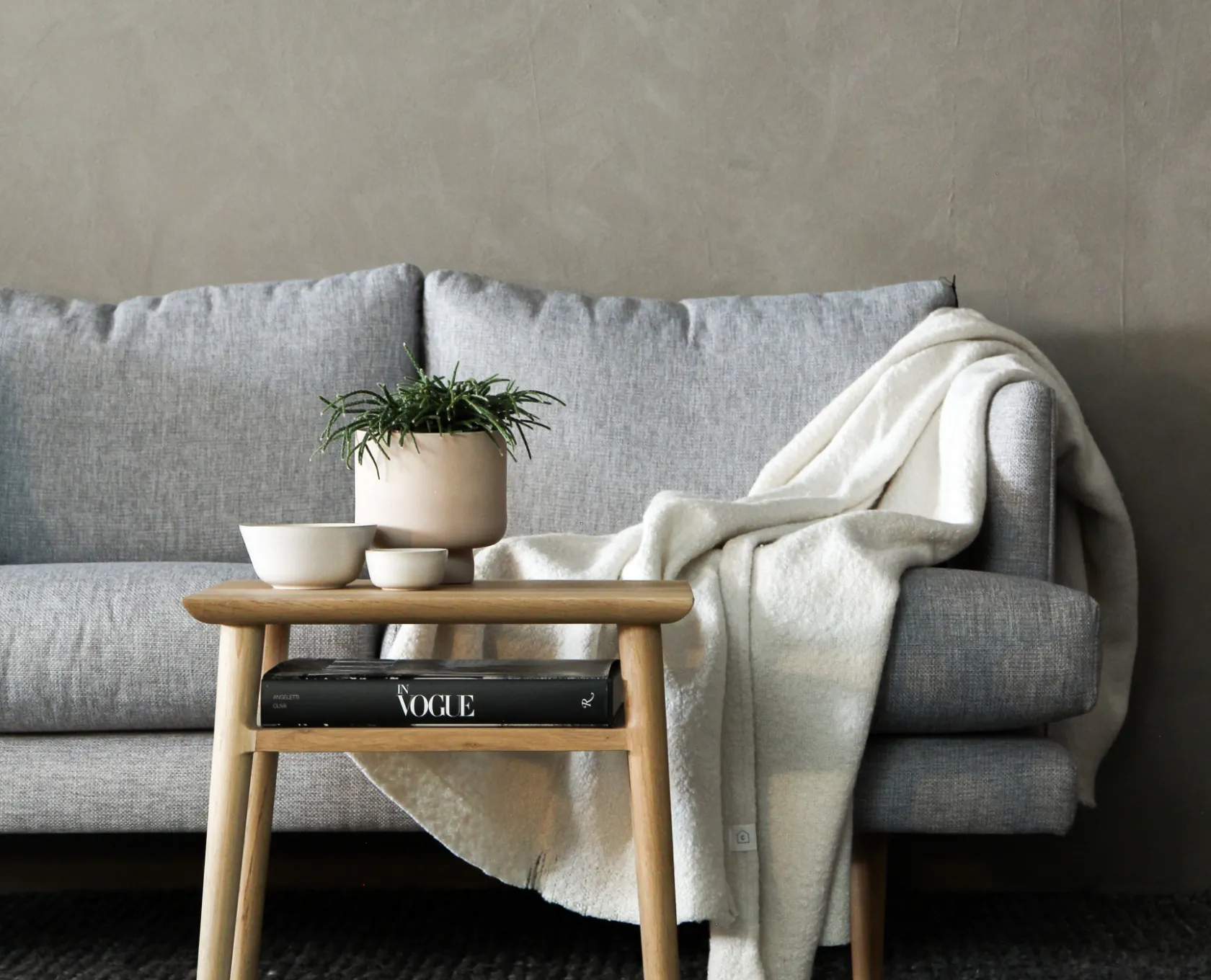
One of the most misunderstood elements in interior design is empty space.
Most people assume a room feels complete when every corner is filled, every wall is decorated, and every surface carries something. But in modern interiors, what makes a space feel refined is often what’s intentionally left untouched.
This is the power of negative space.
Negative space refers to the unoccupied areas around furniture and objects. It is not leftover space. It is not wasted space. It is designed breathing room.
In well-composed interiors, negative space performs a quiet but critical role. It allows the eye to rest. It prevents visual fatigue. It gives structure to the room without adding clutter.
When every inch of a room competes for attention, nothing stands out. But when a single armchair sits with space around it, it gains presence. When a bench is not crowded by accessories, its silhouette becomes stronger. Space frames the object. And framing creates importance.
Negative space also communicates confidence.
Rooms that feel overcrowded often signal hesitation — as if more items were added to compensate for uncertainty. In contrast, restraint suggests clarity. It tells the eye that what is present is enough.
There is also a practical dimension to it. Proper spacing improves proportion. It allows furniture to relate to each other naturally. Walkways become intuitive. Light travels more freely across surfaces, revealing textures and depth that would otherwise be lost.
Modern interiors rely heavily on this principle. Clean lines, balanced layouts, and deliberate spacing create an atmosphere of calm sophistication. It is not about owning more pieces. It is about allowing the right pieces to breathe.
The mistake many homeowners make is confusing fullness with richness. A room does not feel luxurious because it is packed. It feels luxurious when it is composed.
Negative space is composition.
It is the discipline to stop before overcrowding. The awareness that elegance often lies in subtraction rather than addition.
When you begin to see space as an element — just as important as wood, fabric, or metal — your approach to furnishing changes. You choose more intentionally. You edit more confidently. You allow your statement pieces to stand without competition.
In modern interiors, emptiness is not absence.
It is structure.
And when used well, it is what transforms a room from decorated to designed.consequat mauris nunc congue nisi vitae suscipit tellus mauris.